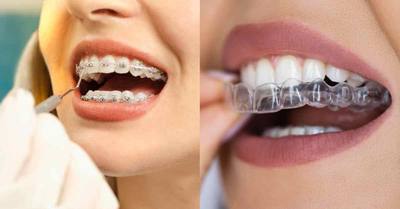
Braces at Dr. Jinny's Dental Clinic
Braces use small brackets bonded to the teeth and a thin wire that is adjusted over time, gently guiding teeth into better positions. They work for simple crowding as well as more complex bite problems, and they are fixed — so they keep working without you having to remember to wear them.
We start by understanding what bothers you about your smile or bite, then examine your teeth, take X-rays and photographs, and explain what braces can achieve in your case, how long it is likely to take and what it will cost.
Types of Braces
Metal braces
Stainless-steel brackets. The most economical and very durable option, suitable for almost every case.
Ceramic braces
Tooth-coloured brackets that blend with your teeth, so they are much less noticeable. Popular with teens and adults.
Prefer something removable and almost invisible? See clear aligners or read aligners vs braces.
Problems Braces Can Correct
- Crowded or overlapping teeth
- Gaps between teeth
- Overbite (upper teeth far ahead of the lower)
- Underbite and crossbite
- Open bite
- Teeth that make cleaning difficult
Your Braces Journey
Consultation
We listen to your concerns, examine your teeth and gums, and discuss whether braces are the right option.
Records & plan
X-rays, photographs and impressions or scans. We explain the plan, the expected duration and the full cost.
Fitting the braces
Brackets are bonded to the teeth and the wire placed — usually in a single visit of about an hour, without injections.
Regular adjustments
Short visits every 4–6 weeks to adjust the wire and check progress.
Retainers
When the braces come off, a retainer keeps your new smile in place.
Living With Braces
- Brush after meals and use an interdental brush around the brackets
- Avoid hard and sticky foods (nuts, hard candy, chewing gum) that can break brackets
- Keep your adjustment appointments so treatment stays on time
- Call us if a bracket comes loose or a wire pokes
Cost depends on your case and the option you choose. Read our braces cost guide, or call 7874 483 483 — every option and its cost is explained before you decide.
Frequently Asked Questions
Many children are assessed around age 7–8 so that early problems can be spotted, and most full braces treatment starts between 11 and 14 once the permanent teeth have come in. Adults can have braces at any age as long as their teeth and gums are healthy.
Most cases take about 12–24 months. The exact time depends on how much the teeth need to move, and on regular adjustment visits and good oral hygiene.
Braces don't hurt when they are fitted. Teeth usually feel sore or tender for a few days after fitting and after adjustments; soft food and normal pain relief help. Wax covers any bracket that rubs.
Both work the same way. Metal braces are the most economical and very durable; ceramic braces are tooth-coloured and less noticeable. Dr. Jinny will explain which suits your teeth and budget.
Yes. Teeth tend to drift back after braces come off, so a retainer (removable or a thin fixed wire) is needed to keep the result.
The cost depends on the type of braces and how complex your case is. After an examination and X-rays we explain the options and the full cost before you decide — see our braces cost guide or call 7874 483 483.