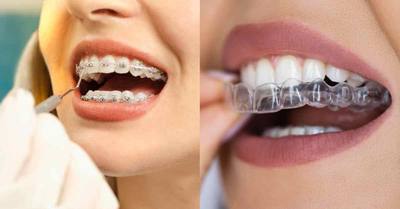
What Are Clear Aligners?
Clear aligners are a series of thin, transparent trays made for your teeth. Each set moves your teeth a little, and you switch to the next set every one to two weeks. Because they are clear and removable, most people around you won't notice them — and you can take them out to eat and to brush.
Aligners suit many adults and teens with crowding, gaps or mild bite problems. They are not the right choice for every case, so we examine your teeth first and explain whether aligners or braces will give you the better result.
Aligners Can Help With
- Mild to moderate crowding
- Gaps between teeth
- Teeth that have moved after earlier braces
- Some overbite, underbite and crossbite cases
How Aligner Treatment Works
Consultation
We listen to what you would like to change, examine your teeth and gums, and check that aligners suit your case.
Scan, X-rays & photos
Records are taken so your treatment can be planned digitally.
Your digital plan
You see a preview of the planned tooth movement and we explain the duration and full cost before you decide.
Wearing your aligners
Wear them 20–22 hours a day and change sets as advised. Small tooth-coloured attachments may be added to help some teeth move.
Progress checks
Regular reviews every 6–8 weeks to make sure everything is on track.
Retainers
A retainer keeps your teeth in their new position once treatment is complete.
Aligners or Braces?
Aligners are removable and nearly invisible, but they only work when you wear them consistently. Braces are fixed and handle complex movements well. Read our comparison: clear aligners vs braces.
Cost depends on your case and the option you choose. Read our clear aligners cost guide, or call 7874 483 483 — every option and its cost is explained before you decide.
Frequently Asked Questions
For many mild to moderate cases of crowding and spacing, yes. Some complex bite problems are better treated with braces. After examining your teeth, Dr. Jinny will tell you honestly which option suits your case.
Typically about 6–18 months, depending on how much the teeth need to move. You will change to a new set of aligners every 1–2 weeks.
About 20–22 hours a day. Take them out only to eat, drink anything other than water, and brush. Wearing them less slows treatment down.
Most people feel pressure or mild tightness for a day or two when they switch to a new set. That is a sign the aligners are working, and it settles quickly.
Teens and adults whose permanent teeth have come in (usually from about 12–14) and whose teeth and gums are healthy. We check this at your consultation.
The cost depends on the aligner system and how many aligners your case needs. We explain the options and the full cost before you decide — see our clear aligners cost guide or call 7874 483 483.